
Ceiling Fan Installation in Round Rock, TX
New fan in a bedroom, a patio fan for summer evenings, or a wobbly fan that needs to come down? Call now for a licensed Round Rock electrician who mounts fans on rated boxes and wires them right.
Round Rock 78664, 78665, 78681 · Pflugerville · Hutto · Georgetown · Cedar Park · Leander
Recent Ceiling Fan Installation Projects in Round Rock, TX
Real indoor and patio ceiling fan installs by licensed local electricians.
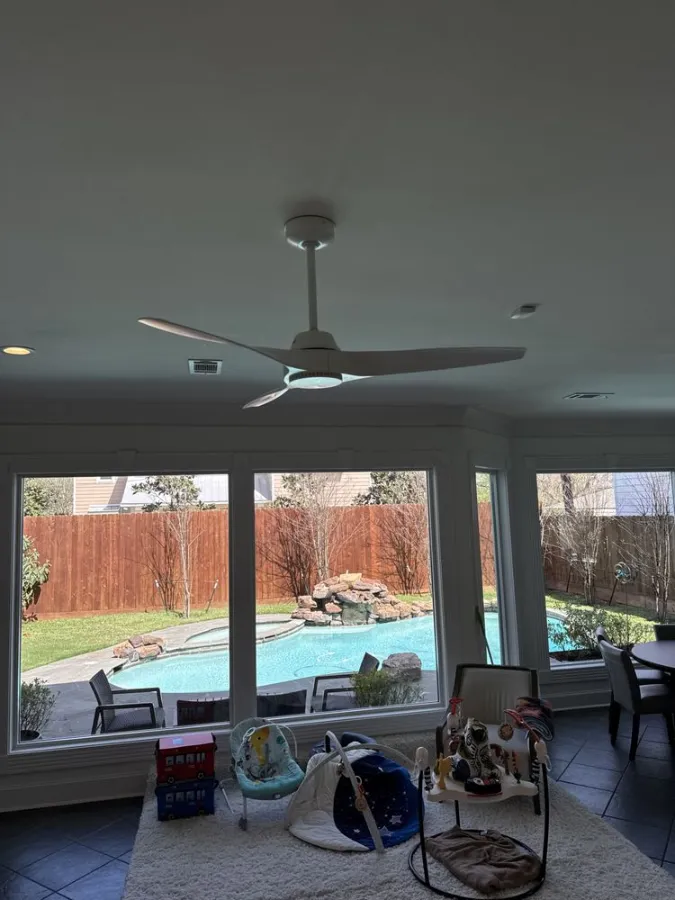
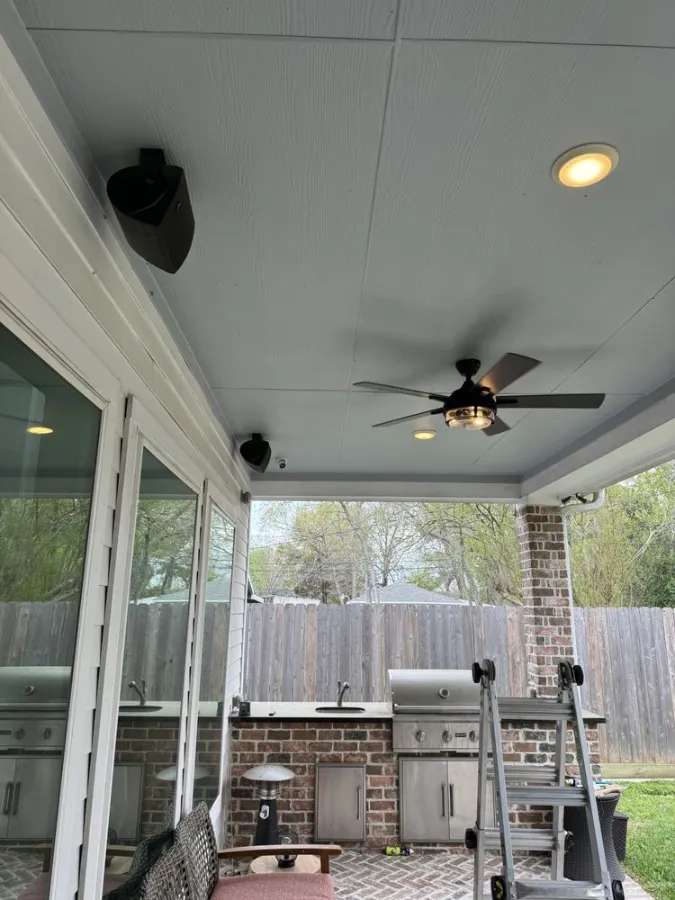
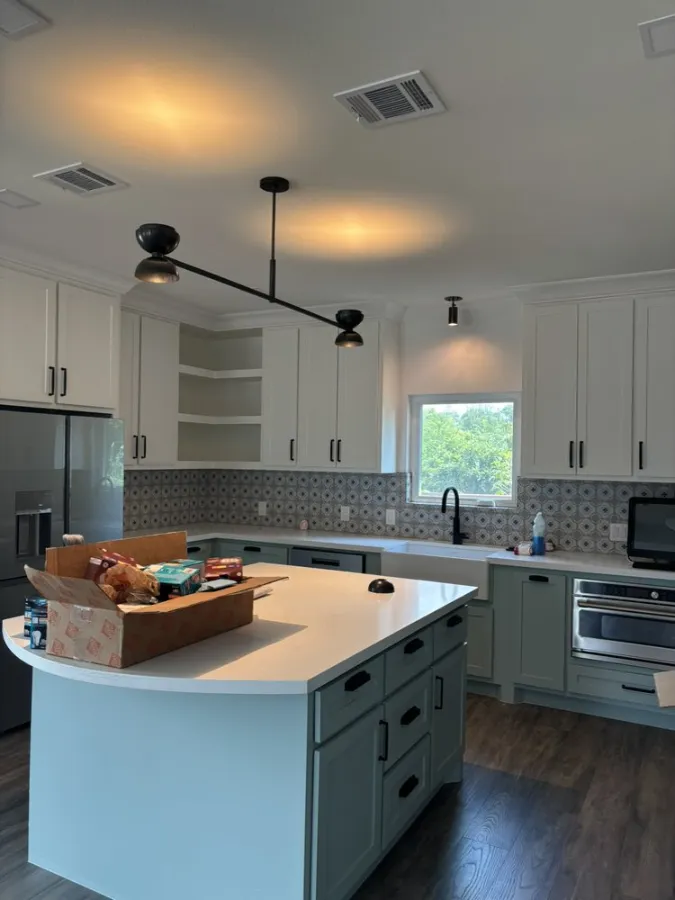
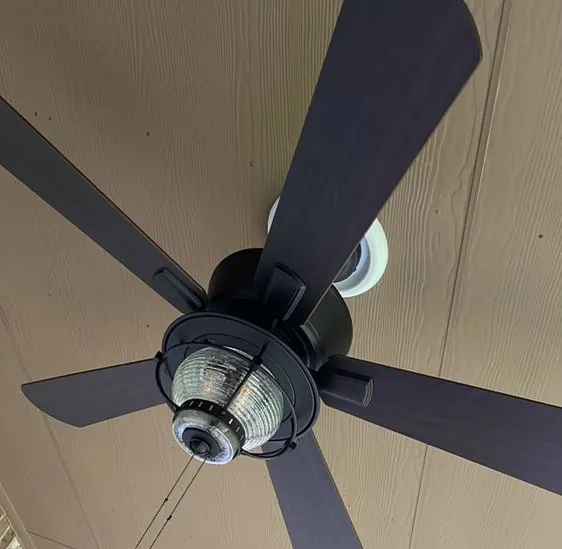
Ceiling Fans Done Safely, Quietly and Level
In a Central Texas summer, ceiling fans do real work. They make a room feel cooler so the air conditioner can run less, and on covered patios they make evenings bearable. That is why ceiling fan installation is one of the most common small electrical jobs in Round Rock.
The most important part of a fan installation is not the fan. It is the box and support above the ceiling. A fan weighs more than most light fixtures and moves constantly, so it must hang from a box listed for fan support or a brace mounted between joists. Hanging a fan from a standard light box is a common cause of wobble, noise and, in the worst cases, a fan that falls.
A licensed electrician also handles the wiring side: separate control of fan and light, compatible wall controls, and the right circuit for the location.
Last updated: November 2026
Call an electrician if
- The room has no ceiling fixture or wiring to start from
- You are replacing a light fixture with a heavier fan
- The existing fan wobbles, hums or makes noise
- You want separate wall switches for fan and light
- The ceiling is vaulted or higher than 10 feet
- The fan is going on a covered patio or porch
Types of Ceiling Fan Installations
Light fixture to fan
The most common job. The existing box is checked and replaced with a fan-rated box if needed, and the fan and light kit are wired to the existing switch or to new dual controls.
New fan location
Where there is no fixture, a new box, brace and switch are installed with cable run through the attic. This usually needs a permit.
Vaulted and high ceilings
Sloped ceilings need an angled mount and the right downrod length. High ceilings need taller ladders or scaffolding.
Patio and porch fans
Covered outdoor areas need damp-rated fans; exposed areas need wet-rated fans and weatherproof boxes.
Remote and smart controls
Remotes and smart controllers avoid running new switch wiring. Wall controls designed for fans prevent hum caused by standard dimmers.
Fan replacement
Swapping an old fan for a quieter, more efficient DC motor fan is quick when the existing box is rated.
How Fan Installation Works
Most single-fan installs take an hour or two.
Check the box and support
Our electrician confirms the box is listed for fan support or installs a fan brace between joists.
Wire the controls
The fan and light are connected to existing or new switches, a remote receiver or a smart controller.
Assemble and balance
The fan is mounted, blades are installed and balanced to stop wobble.
Test
All speeds, reverse and light functions are tested.
Choosing the Right Fan Size
| Room size | Typical fan blade span |
|---|---|
| Up to about 75 sq ft | 29 to 36 inches |
| About 76 to 144 sq ft | 36 to 42 inches |
| About 144 to 225 sq ft | 44 to 50 inches |
| About 225 to 400 sq ft | 50 to 54 inches |
| Large great rooms and patios | 56 inches and larger, or two fans |
These are common industry sizing guidelines. Blades should be at least 7 feet above the floor and clear walls and furniture.
Codes and Permits
The National Electrical Code, adopted by Round Rock in its 2023 edition, requires fans to be supported by boxes listed for that purpose or by independent support. Patio fans must be rated for damp or wet locations. Replacing a fixture with a fan at the same location generally does not need a permit; new boxes, switches or circuits generally do.
The ENERGY STAR ceiling fan page lists efficient models.
What Affects Fan Installation Cost
- Whether wiring and a box already exist.
- Ceiling height and slope.
- New wall switches or smart controls.
- Number of fans installed in one visit.
- Outdoor rated boxes and fans.
You get a clear price before work begins. Installing several fans in one visit usually lowers the cost per fan.
Safety Tips
- Turn off the breaker, not just the wall switch, before touching a fixture.
- Never hang a fan from a box not listed for fan support.
- Use the safety cable included with many fans.
- Stop using a fan that wobbles badly or makes grinding noises.
- In summer, run fans counterclockwise to push air down.
Fans in Round Rock Homes
Bedrooms in many 1980s and 1990s homes in Round Rock West, Forest Creek and Chisholm Valley were built with a fan box and switch, which makes replacement simple. Some newer homes in Teravista, Paloma Lake and Mayfield Ranch were built with lights only in secondary bedrooms, and owners add fans later. Covered patios and outdoor kitchens across the city are popular spots for wet-rated fans.
Getting the Most From Ceiling Fans in a Texas Summer
A ceiling fan does not lower the air temperature; it creates a breeze that makes people feel cooler. That means fans help most when someone is in the room. Turning fans off in empty rooms saves energy. Running the fan counterclockwise in summer pushes air downward for the cooling effect.
DC motor fans use less energy and run more quietly than many older AC motor fans, and most come with remote controls and multiple speeds. Pairing fans with a slightly higher thermostat setting is one of the simplest ways to reduce summer cooling costs.
Questions to ask our electrician
- Is the existing box rated for a fan?
- Can the fan and light be on separate switches?
- Will a remote work with my fan, or do I need wall wiring?
- What downrod length is right for my ceiling?
- Is the patio location damp or wet rated?
Related Electrical Services in Round Rock
Lighting Installation
Recessed and fixture lighting.
Switches and Controls
Fan controls and smart switches.
Electrical Repair
Fix fans and fixtures that stopped working.
House Rewiring
Add circuits and update old wiring.
Serving Round Rock and nearby Pflugerville, Hutto, Georgetown, Cedar Park, Leander and Brushy Creek.
Ceiling Fan Installation FAQs
Can I replace a light fixture with a ceiling fan?
Usually yes, as long as the box is listed for fan support or a fan brace is installed. Our electrician checks before mounting the fan.
Do I need a permit to install a ceiling fan in Round Rock?
Replacing a fixture with a fan at the same location generally does not need a permit. New boxes, switches or wiring generally do.
Why does my ceiling fan wobble?
Unbalanced blades, a loose mount or a box not rated for fans. Balancing kits fix blade issues; a loose or unrated box needs replacement.
Can I control the fan and light separately?
Yes, with two wall switches if wiring allows, or with a remote or smart controller.
What fan do I need for a covered patio?
A damp-rated fan for covered areas or a wet-rated fan where rain can reach it.
How high should a ceiling fan be?
Blades should be at least 7 feet above the floor. On high ceilings, a downrod brings the fan to an effective height.
Can I use a regular dimmer on a fan?
No. Standard dimmers can damage fan motors and cause hum. Use a fan speed control.
How long does fan installation take?
One to two hours for a replacement; longer for new locations or high ceilings.
Do ceiling fans save energy?
They can, by letting you set the thermostat a little higher while staying comfortable, especially in summer.
Who installs the fan?
Our licensed electricians serve Round Rock and nearby Williamson County. Every job is done by a Texas licensed electrician.
Need a Ceiling Fan Installed?
Call us today for licensed electrician service in Round Rock. Call us today to schedule electrical service.
📞 Call Now 123456