
EV Charger Installation in Round Rock, TX
Bring home a Tesla, Rivian, Ford, Hyundai or any EV and want faster charging? Call now for a licensed Round Rock electrician who sizes the circuit to your panel and installs it to code.
Round Rock 78664, 78665, 78681 · Pflugerville · Hutto · Georgetown · Cedar Park · Leander
Recent EV Charger Installation Projects in Round Rock, TX
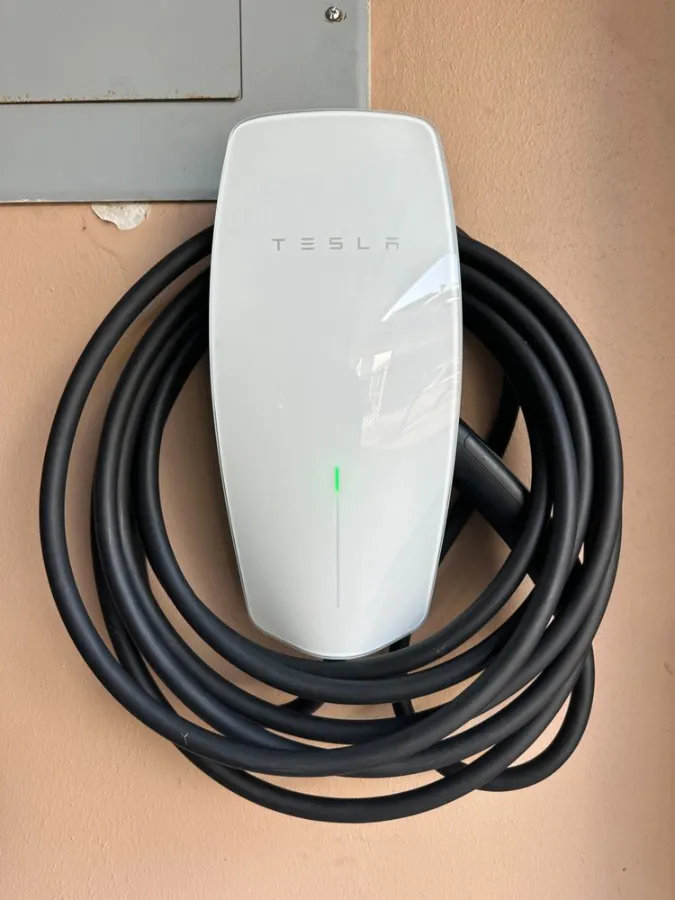
Real EV charger installs by licensed local electricians, from Tesla Wall Connectors to outdoor level 2 chargers.


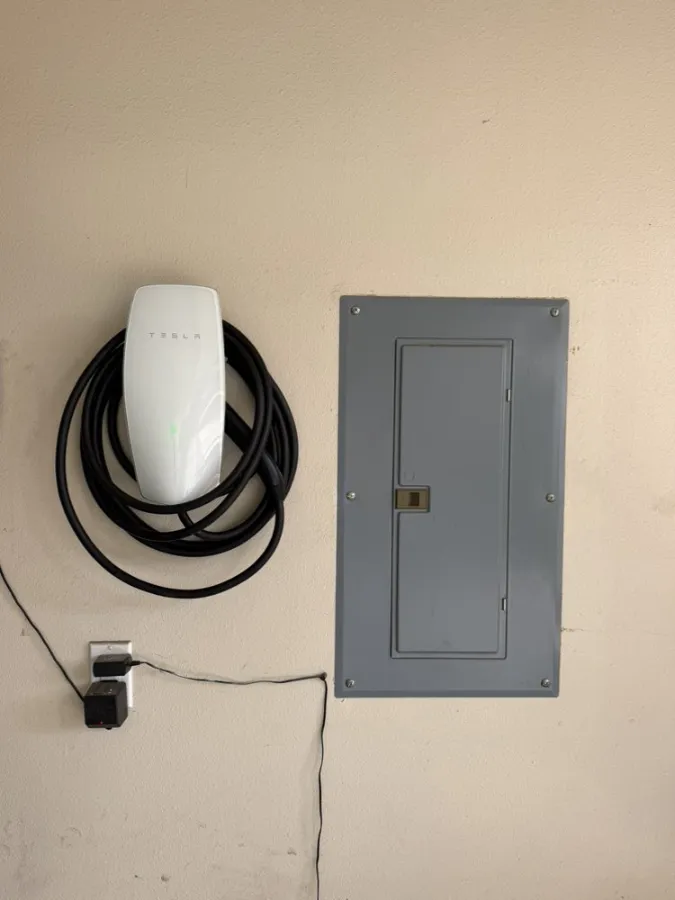

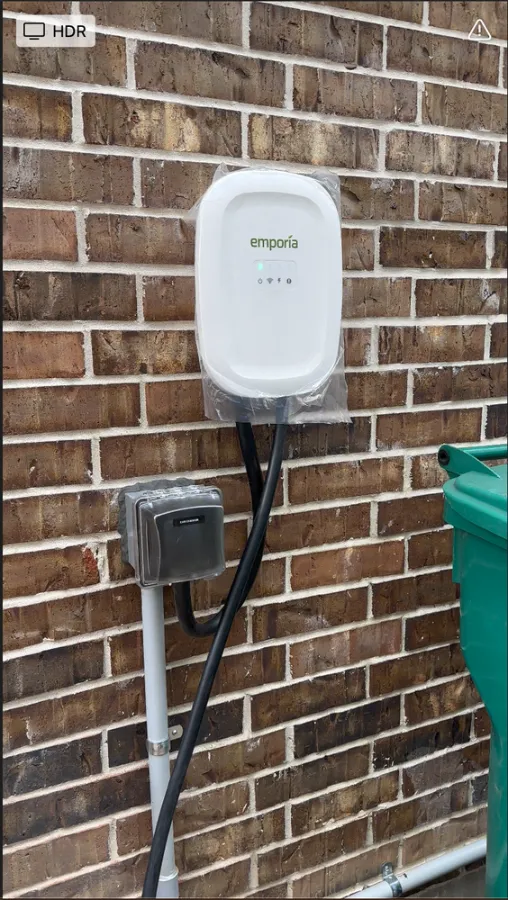
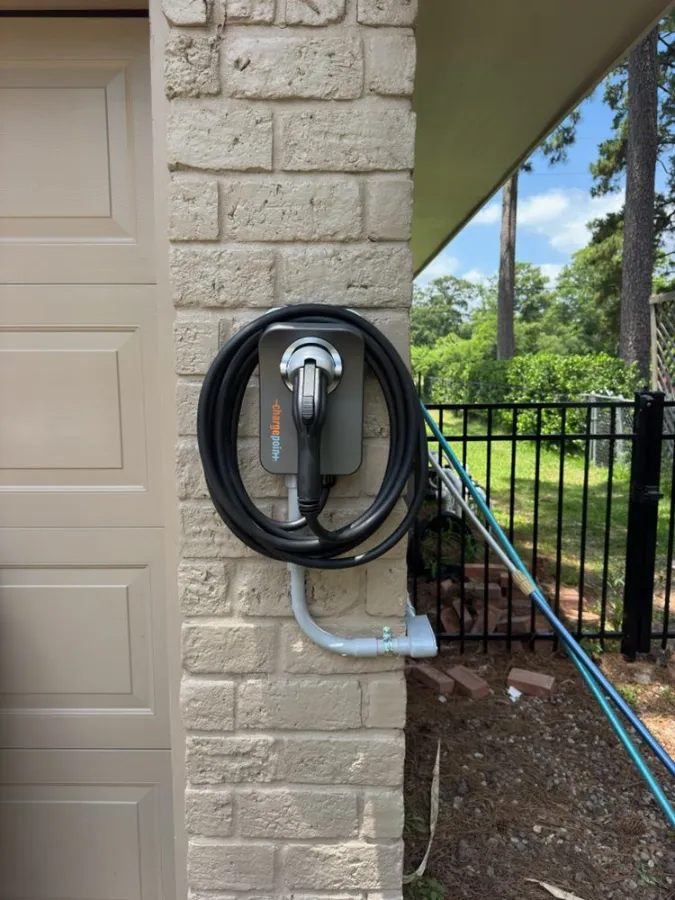

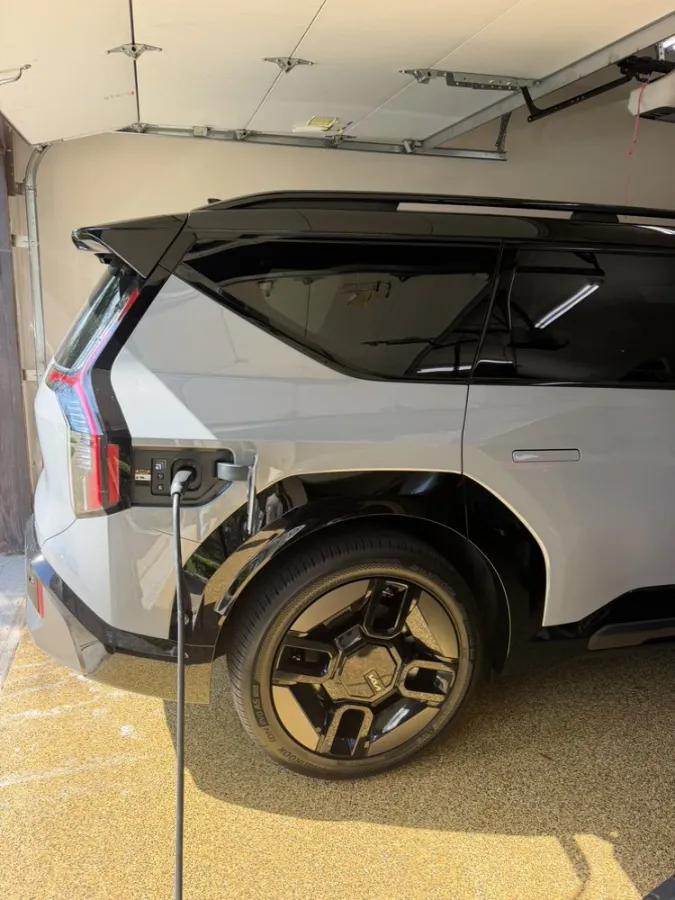
Level 2 Charging at Home, Installed Right
A standard 120V outlet adds only a few miles of range per hour, which is fine for a short commute but slow for most drivers. A Level 2 charger on a 240V circuit can add roughly 20 to 40 miles of range per hour depending on the car and the circuit, so the battery is full by morning.
Round Rock has plenty of good spots for home charging, with attached garages in most neighborhoods from Brushy Creek to Teravista and Mayfield Ranch. The main questions are always the same: does your panel have room, how far is the garage from the panel, and should you hardwire a charger or install an outlet?
A licensed electrician answers those questions on the first visit. Getting them right avoids nuisance trips, warm outlets and the expensive surprise of discovering the panel cannot handle the load after the charger is already on the wall.
Last updated: November 2026
Call before you buy a charger if
- Your home has 100 or 150 amp service
- The panel has no open breaker slots
- The garage is far from the panel or on the opposite side of the house
- You want to charge two EVs
- You also plan a heat pump, pool or hot tub
- You are not sure whether to hardwire or use an outlet
Choosing the Right Setup for Your Home
Hardwired Level 2 charger
Wired directly to a dedicated circuit. Supports higher charging rates, has no plug to wear out and usually looks cleaner. Many manufacturers recommend hardwiring for 48 amp chargers.
NEMA 14-50 outlet
A 240V outlet you can plug a mobile charger into. Flexible if you change vehicles, but the outlet must be a quality, properly rated device, and current code requires GFCI protection for many outlets in garages and outdoors.
Circuit size
Continuous loads like EV charging must not exceed 80% of the circuit rating. A 40 amp charger needs a 50 amp circuit, and a 48 amp charger needs a 60 amp circuit, with wire sized to match.
Load management
Many smart chargers can be set to a lower rate or paired with a device that limits charging when other big loads run. This can avoid a service upgrade on a busy panel.
Location
Mount the charger where the cable reaches the charge port without stretching across the garage floor. Outdoor installs need weather-rated equipment and protection from physical damage.
Two-car charging
Two EVs can share capacity with chargers that support power sharing, which is often cheaper than two full-size circuits.
Works with every major EV brand
EV Charger Installation in Round Rock for Every Make and Model
A Level 2 home charger is not tied to one car brand. Most EVs sold in the U.S. use either the J1772 connector or the newer NACS (SAE J3400) connector that Tesla introduced and many other automakers are adopting. Adapters let either type charge from the other, so our electrician can install a circuit and charger that fits the car in your garage now and the next one too.
Tesla
Wall Connector or NEMA 14-50 installs for Model 3, Model Y, Model S, Model X and Cybertruck, sized to your panel.
Ford
Level 2 charging for the Mustang Mach-E and F-150 Lightning, including higher-output setups where the panel allows.
Rivian
Home charging for the R1T and R1S, with circuits planned for the larger batteries these trucks and SUVs carry.
Chevrolet and GM
Silverado EV, Blazer EV, Equinox EV, Cadillac LYRIQ and other GM EVs on a dedicated 240V circuit.
Hyundai and Kia
IONIQ 5, IONIQ 6, EV6, EV9 and other models, including chargers set to match each car’s onboard charging rate.
BMW, Mercedes and Audi
i4, iX, EQE, EQS, Q4 e-tron and other European EVs using J1772 or adapters.
Plug-in hybrids
Shorter-range plug-ins often charge fine on a smaller circuit, which can avoid a panel upgrade.
Every other EV
If your car charges from a J1772 or NACS plug, a properly sized 240V circuit and charger will work with it.
Not sure what your car can accept? The onboard charger limits how fast any home charger can fill the battery. Tell our electrician your make, model and year when you call, and they will size the circuit so you are not paying for capacity the car cannot use.
Which charger do you need?
Level 1 vs Level 2 vs DC Fast Charging in Round Rock
There are three charging levels. For almost every Round Rock home, Level 2 is the practical choice. Range figures below are typical estimates from the U.S. Department of Energy Alternative Fuels Data Center; your car may charge faster or slower.
- Plugs into a standard 120V outlet
- Usually needs no new wiring
- Can take a day or more to refill a large battery
- Hard to keep up with longer daily commutes
- Best as a backup or for plug-in hybrids
- Dedicated 240V circuit installed by a licensed electrician
- Typically refills most daily driving overnight
- Works with every major EV brand
- Can often be added with a load calculation and a city permit
- The best fit for most Round Rock homes
- Used at public stations and for fleets
- Very fast charging on road trips
- Needs high-capacity commercial power
- Equipment and installation are very costly
- Not a practical option for homes
Running a business or fleet in Round Rock? Commercial Level 2 and DC fast charging projects need a service capacity review and permits; see our commercial electrician page.
How EV Charger Installation Works
From first call to first charge, most installations follow this path.
Site and panel check
Our electrician looks at the panel, measures the route to the parking spot and runs a load calculation to confirm capacity.
Choose equipment
You pick a hardwired charger or a 240V outlet. Our electrician sizes the breaker and wire for the charger you choose.
Permit and install
A City of Round Rock permit is pulled. The circuit is run through the attic, walls or conduit and the charger or outlet is mounted.
Inspect and test
After inspection, the charger is tested with your vehicle and set to the correct current limit for the circuit.
Typical EV Circuit Sizes
Charger output and circuit size go together. Our electrician will confirm with the charger manual.
| Charger output | Circuit breaker | Approximate added range per hour |
|---|---|---|
| 16 amps | 20 amps | About 12 to 15 miles |
| 24 amps | 30 amps | About 18 to 22 miles |
| 32 amps | 40 amps | About 24 to 30 miles |
| 40 amps | 50 amps | About 30 to 37 miles |
| 48 amps | 60 amps | About 36 to 44 miles |
Range per hour varies by vehicle efficiency and the car’s onboard charger limit. Figures are typical estimates for planning, based on common 240V charging rates.
Permits and Code for EV Chargers
Adding a new circuit for an EV charger requires an electrical permit from the City of Round Rock inside city limits. The city uses the 2023 National Electrical Code, which includes Article 625 for EV charging equipment, rules for continuous loads, and GFCI requirements for many outlets in garages and outdoors.
If the job includes a panel replacement or service upgrade, the city also requires a torque letter signed by the master electrician. Check the city trade permit page for current requirements, and use the U.S. Department of Energy home charging guide to compare charging levels.
What Affects EV Charger Installation Cost
Our electrician sets the price after seeing the panel and route. Main factors:
- Distance from the panel to the parking spot.
- Route: open attic, finished walls or exterior conduit.
- Circuit size and wire gauge.
- Panel capacity: whether a load management device, subpanel or panel upgrade is needed.
- Equipment: the charger itself, if supplied by our electrician.
- Permit and inspection.
Before you buy, ask your retail electricity provider and Oncor about any current EV programs or time-of-use plans, which can lower charging costs.
Can You Install It Yourself?
Plugging a mobile charger into an existing 240V outlet is simple. Installing the circuit is not. A 50 or 60 amp circuit involves working in the panel, sizing wire correctly for a continuous load and meeting GFCI and labeling rules. Mistakes show up as melted outlets and tripped breakers months later.
Texas allows owners to work on the home they live in, but the city permit and inspection still apply. Most homeowners have a licensed electrician do it. Verify the license with TDLR.
EV Charging Across Round Rock
EV ownership has grown quickly across Williamson County. Calls come from attached two-car garages in Teravista, Paloma Lake, Siena and Mayfield Ranch, from older homes in Round Rock West and Chisholm Valley where the panel is often the deciding factor, and from Brushy Creek and Behrens Ranch homes with garages on the far side from the panel.
Round Rock is in the competitive Texas electricity market, so your energy price depends on the retail provider and plan you choose, while Oncor delivers the power to most addresses. Plans with lower overnight rates can make home charging cheaper. Compare options on Power to Choose.
Planning Tips Before Your Installation
Think about your next car, too
Many households add a second EV within a few years. If you are running a new circuit now, consider wire sized for a higher-output charger, or a charger that supports power sharing between two units. Running the wire once is cheaper than replacing it later.
Decide where the car will park
Most charge ports are on the front driver side, rear driver side or rear passenger side, depending on the model. Mount the charger so the cable reaches without crossing walkways. If you park outside, choose equipment rated for outdoor use and plan for Central Texas sun and heat, which are hard on plastic housings and cables.
Wi-Fi and scheduling
Smart chargers and most EV apps let you schedule charging overnight. If your garage has weak Wi-Fi, you can still schedule charging from the car itself in most cases.
Charging during a Texas summer
Garages in Round Rock can get very hot in summer. Heat raises the resistance of connections, so quality outlets, correct torque on terminals and properly sized wire matter more here than in mild climates. A loose 14-50 outlet is one of the most common causes of melted EV plugs. Hardwiring removes that weak point.
HOAs and townhomes
Many Round Rock neighborhoods have HOAs. Interior garage installs rarely need HOA approval, but exterior conduit or a charger mounted on the outside of the home may. Townhomes and condos may also need permission to use a shared electrical meter or common area.
Rebates and credits
Incentives change often. Check with your retail electricity provider, Oncor and the federal government for current programs before buying equipment, and keep your receipts and permit records.
Related Electrical Services in Round Rock
Panel Upgrade
When the panel cannot support a charger.
Outlets and 240V Receptacles
Install or replace 240V outlets for chargers and tools.
Surge Protection
Protect your charger and car electronics.
Electrical Inspection
Check overall capacity before adding loads.
Serving Round Rock and nearby Pflugerville, Hutto, Georgetown, Cedar Park, Leander and Brushy Creek. Related guide: Panel upgrade cost in Round Rock.
EV Charger Installation FAQs
Do I need a permit to install an EV charger in Round Rock?
Yes. A new 240V circuit for an EV charger requires an electrical permit and inspection from the City of Round Rock inside city limits.
Can my panel handle an EV charger?
It depends on your service size, existing loads and the charger output. An electrician runs a load calculation to decide. Some homes need a load management device or a panel upgrade.
Should I hardwire my charger or use a NEMA 14-50 outlet?
Hardwiring supports higher output and removes the plug as a failure point. An outlet offers flexibility for a mobile charger. Both are acceptable when installed correctly.
What size breaker does an EV charger need?
EV charging is a continuous load, so the circuit must be rated at 125% of the charger output. A 40 amp charger needs a 50 amp circuit; a 48 amp charger needs a 60 amp circuit.
How long does installation take?
A straightforward garage install near the panel can be done in a few hours. Longer runs, finished walls or panel upgrades take longer.
Will a Level 2 charger raise my electric bill much?
Your bill rises with the energy used to charge. In Round Rock you choose a retail provider, and plans with lower overnight rates can reduce the cost.
Can I install a charger outside?
Yes, with equipment rated for outdoor use and wiring protected from damage and weather.
Can two EVs share one circuit?
Some chargers support power sharing so two units split one circuit. This is often cheaper than running two large circuits.
Does a GFCI need to protect an EV outlet?
Current code requires GFCI protection for many 240V outlets in garages and outdoors. Our electrician will install the correct protection.
Who installs the charger?
Our licensed electricians serve Round Rock and nearby Williamson County. Every job is done by a Texas licensed electrician.
Ready for Faster Charging at Home?
Call us today for licensed electrician service in Round Rock. Call us today to schedule electrical service.
📞 Call Now 123456